
How Universal Thread's Memory Foam Technology Actually Works in Sandals and Boots
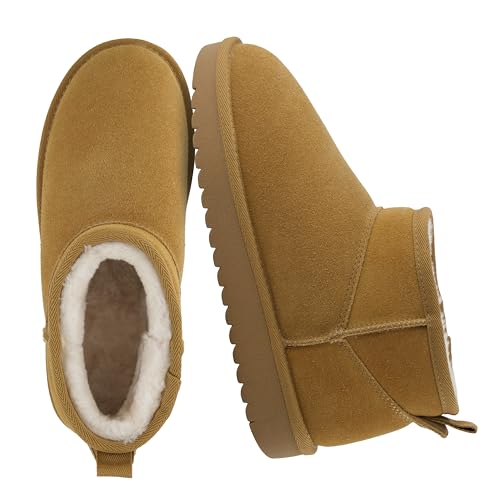
Memory foam footwear promises all-day comfort, but the actual engineering behind that cushioning varies widely across brands and styles. Universal Thread designs our women’s memory foam sandals and Reed memory foam boots with a specific viscoelastic polyurethane foam system that responds differently under a sandal strap versus inside a closed boot structure.
This guide breaks down how our memory foam technology actually functions in both open and closed footwear, what happens at the material level when you walk, and why the same core foam behaves differently depending on whether it’s supporting a bare foot in summer or layered with socks in winter.

The Core Foam Formula: Viscoelastic Response and Temperature Sensitivity
Our memory foam is a polyurethane blend engineered to soften slightly when it contacts body heat, allowing the material to mold around pressure points rather than pushing back uniformly like traditional EVA foam. In sandals, this means the foam compresses most under the heel strike and ball of the foot, creating custom contours within about ten minutes of wear.
The same foam in our Reed boots works under different conditions because socks and enclosed leather retain more heat against the footbed. The warmer environment accelerates the foam’s viscoelastic response, so initial break-in feels faster in boots than sandals. Both applications use identical foam density—we don’t manufacture separate formulas for open versus closed styles.
Temperature sensitivity also explains why memory foam sandals boots feel firmer on cold mornings and softer by midday. The material’s compression modulus changes roughly 15-20% between 60°F and 98.6°F, which is why stepping into a cold boot requires a few minutes of wear before the cushioning fully activates.
Compression Depth and Recovery Speed Under Different Footwear Structures
Memory foam in sandals compresses about 8-12mm under average standing weight, then recovers to original thickness within 3-5 seconds after you lift your foot. The open construction allows air circulation that accelerates this rebound cycle, which matters during active wear when your foot repeatedly strikes and lifts.
Boots restrict airflow around the foam, slowing the recovery phase to roughly 6-8 seconds. This isn’t a flaw—the enclosed design trades faster rebound for better shape retention over the shoe’s lifespan. Sandal foam cycles through compression thousands more times per year because the material fully decompresses between steps, while boot foam remains partially compressed throughout the day.
How Strap Tension vs Boot Structure Changes Load Distribution
Sandal straps concentrate pressure along narrow bands across the top of your foot, so the foam primarily responds to vertical heel and forefoot loads. Boot uppers distribute lateral forces across the entire foot surface, meaning the footbed foam handles multi-directional compression—forward slide during downhill walking, medial roll during turns, and vertical impact. Our boot foam includes slightly higher density at the heel cup specifically to manage these combined loads without bottoming out.
Arch Support Integration: Molded vs Reactive Contouring
Traditional arch supports are rigid inserts, but our memory foam technology creates reactive arch contouring that adjusts to your specific foot shape. In sandals, the foam remains exposed along the medial edge, so you can visually see the arch impression forming during the first few wears—it typically stabilizes into a permanent contour after about 15-20 hours of use.
Boot construction hides this process inside the shoe, but the mechanics are identical. The main difference is moisture management: sandals shed perspiration through open sides, while boots trap it against the foam. We treat all our memory foam footbeds with antimicrobial finish to prevent odor and material breakdown, but boot foam still degrades slightly faster than sandal foam purely due to sustained moisture exposure.
For people comparing fit across our footwear range, the same principles apply whether you’re evaluating sandals or addressing common denim issues—proper contouring takes time. Just as our high-rise skinny jeans require a break-in period to settle around individual body shapes, memory foam needs wear cycles to develop its final support profile.
Long-Term Durability: Why Sandals and Boots Age Differently
Memory foam doesn’t last forever in any application—the cells eventually lose elasticity and stop rebounding fully. Sandals typically show compression fatigue first at the heel strike zone after 12-18 months of regular wear, visible as a permanent depression that no longer springs back. This happens sooner in sandals than boots because the foam experiences full decompression between steps, cycling through its maximum strain range thousands of extra times.
Boots retain cushioning performance longer, usually 18-24 months, because the foam remains in a semi-compressed state most of the time. Partial compression cycles stress the material less than full expansion-contraction. However, boots face accelerated breakdown from moisture and heat buildup, which chemically degrades the polyurethane bonds faster than mechanical compression alone.
When to Replace vs Refresh Footbeds
You’ll know sandal foam is spent when standing pressure no longer creates visible compression—the surface stays flat even under your full weight. Boot foam failure is harder to see but produces a flat, dead feel underfoot and often coincides with the insole peeling away from the shoe bed. Neither can be rejuvenated; replacement is the only fix once the foam’s cellular structure collapses.
Why the Same Foam Technology Performs Differently by Design
Memory foam isn’t a single-use material—it’s an engineered system that behaves according to its surrounding structure. Our sandals and boots use identical viscoelastic polyurethane, but open versus closed construction creates entirely different mechanical and thermal environments for that foam to operate within.
Understanding these differences helps you choose the right style for your actual wear conditions and set realistic expectations for break-in time and lifespan. Neither sandals nor boots deliver objectively better memory foam performance—they’re optimized for different biomechanical demands, and both rely on the same core material science to deliver adaptive cushioning that shapes itself around your specific foot.
Common Questions About Memory Foam in Open vs Closed Footwear
The foam formula is identical, but support differs because sandals lack upper structure to stabilize your foot laterally. Boot uppers prevent side-to-side roll, letting the memory foam focus purely on vertical cushioning and arch contouring. Sandals require your foot’s intrinsic muscles to handle lateral stability while the foam manages impact absorption. Neither is better—they’re engineered for different movement patterns.
Memory foam is temperature-sensitive polyurethane that softens as it warms. Below about 65°F, the material’s compression modulus increases, making it feel firmer until your body heat activates the viscoelastic response. This takes 2-3 minutes in sandals exposed to ambient air, but only 30-60 seconds in boots where enclosed leather and socks trap warmth against the footbed faster.
Our sandals use glued-in footbeds that aren’t designed for removal—peeling them out damages both the foam and the sandal base. Reed boots have removable insoles that can be replaced with aftermarket options, though you’ll lose the specific arch geometry we engineered for that boot last. Third-party memory foam insoles vary widely in density and rebound speed, so fit and feel will differ from the original.
Expect 15-20 hours of actual wear time for the foam to develop its final contour around your specific foot shape. Sandals feel closer to broken-in after the first few wears because open construction lets you see the compression happening. Boots take the same total hours but the process is hidden, so they feel less predictable during the first week of wear.
No—foam durability depends on total compression cycles and environmental exposure, not the calendar. Rotating between styles actually extends each pair’s lifespan because you reduce daily wear frequency. A sandal worn every other day lasts roughly twice as long as one worn daily, and the same applies to boots. The foam doesn’t degrade from sitting unused between wears.
Sandals shed moisture through open sides, so foam stays drier and develops less odor from bacterial growth. Boot foam traps perspiration in an enclosed, warm environment ideal for bacteria that produce volatile sulfur compounds—the source of most shoe odor. Both footbeds have antimicrobial treatment, but boots simply face harsher conditions. Airing boots overnight and alternating pairs helps, but some odor buildup is unavoidable in any closed shoe with organic foam.